




The price of a website ranges from €1,000 to €50,000 depending on the type of project. Count on €2,000 to €8,000 for a showcase website, €5,000 to €15,000 for an optimized marketing website, and more for a custom project.
How much does a website cost in practice?
The price of a website varies mainly depending on the ambition level of the project. In practice, a simple showcase website, a custom marketing website, and a richer website do not involve the same budgets.
To get a quick sense of it, we use a project-level grid rather than a vague range. It is more readable for estimating a budget before scoping.
| Project level | Observed range | Typical deliverables |
|---|---|---|
| Simple website | €1,500 to €5,000 | Essential pages, light design, basic integration |
| Structured showcase website | €5,000 to €12,000 | Well-developed sitemap, CMS, responsive, basic SEO |
| Custom website | €12,000 to €30,000 and more | Dedicated components, animations, integrations, full support |
This benchmark remains valid for a company website, a startup, or a brand that wants a credible foundation. With a Webflow studio approach, the team is sized to the site’s real scope, which avoids paying for a structure that is too heavy for a simple need, or the reverse.
We often observe that budget differences come less from the number of pages than from the depth of the work. A six-page website can cost more than a fifteen-page website if the templates, content, and integrations are complex.
For a scoped project, mad.studio mobilizes a Webflow team adapted to the level of complexity. This approach makes it possible to align concept, design and integration without oversizing the project.
What makes the bill go up or down
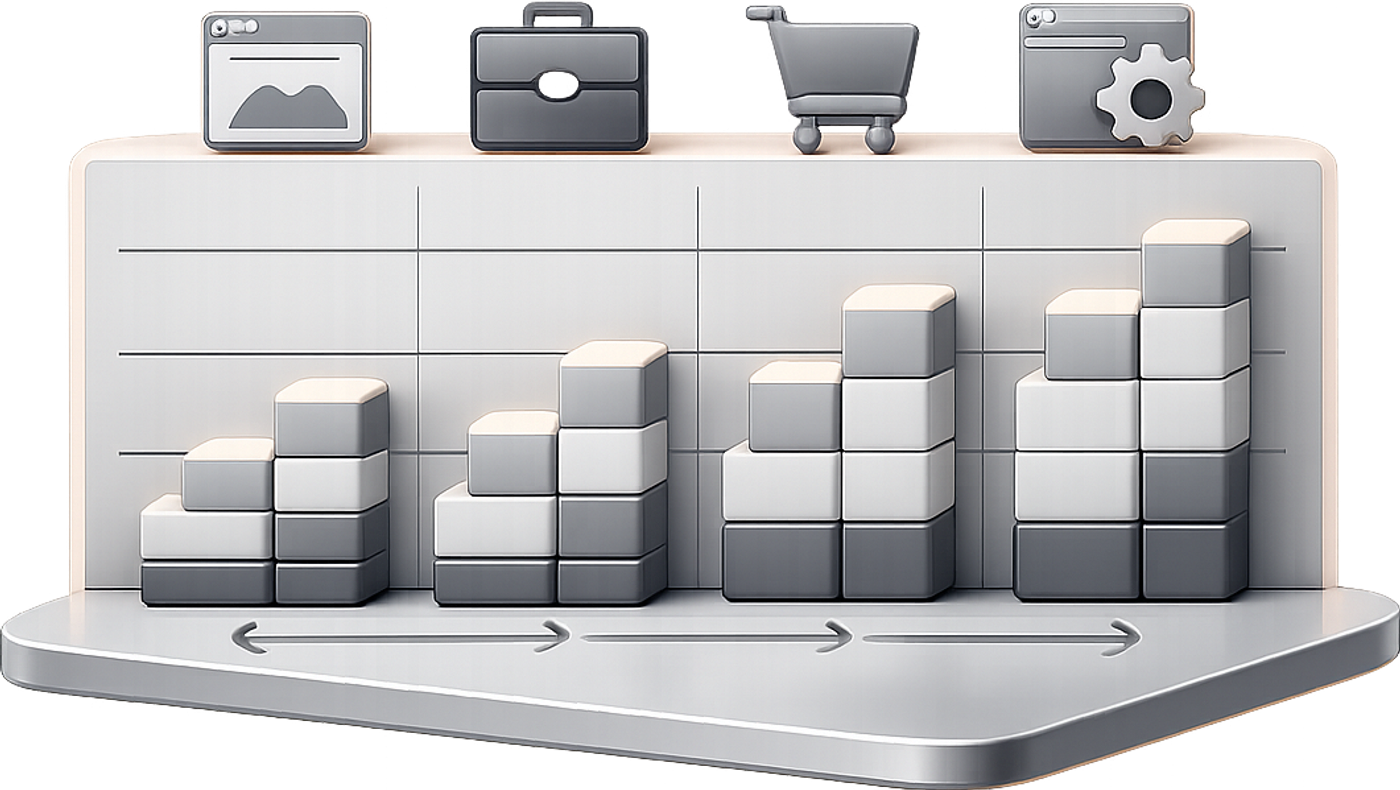
The bill increases when the site requires more structure, more creation, and more back-and-forth. It goes down when the scope is clear, the content is ready, and the design relies on a reusable base.
Three levers explain most of the budget : the functional scope, the level of design and development, and then the weight of content and timelines.
- The more templates and features there are, the more time scoping and integration take.
- The more customized the design, the longer the concept and assembly phase.
- The later the content arrives, the more expensive the validation loops become.
The functional scope
The number of pages matters, but it is especially the templates and features that weigh in. A template page, a complex form, a private area, or a content filter increase design and development time.
A ten-page website with three different templates requires more work than a fifteen-page website with a consistent structure. This is a point we often clarify at mad.studio to avoid misleading quotes.
- Number of actual pages to produce
- Number of templates to design
- Forms, filters, funnels, or third-party connections
- Access management, member areas, or restricted content
The level of design and development
A customized template costs less than an art direction created from scratch. The former relies on existing structures; the latter requires art direction and a custom component system.
Customization becomes relevant when the website needs to carry a strong image or a highly controlled experience. In that case, the price of a website also reflects the quality of execution, not just the number of screens delivered.
A more demanding design does not just mean a “prettier” website. It often involves more responsive testing, more micro-interactions, and more control over the final result.
The weight of content and timelines
The budget also depends on what we need to produce or rewrite. When texts, visuals, and approvals arrive late, the project requires more coordination time.
Urgency almost always adds cost. It reduces room for thinking, forces parallel work, and increases the risk of revisions.
- Writing or revising content
- Icon research and visual tweaks
- Number of approval cycles
- Tight deadlines with multiple stakeholders
Website price: freelance vs agency
A freelance professional often costs less upfront, but does not always cover every stage with the same depth. An agency or specialized studio charges more, but brings broader and more secure execution capacity.
The right choice depends on project risk, timing, and the number of stakeholders to coordinate. For a project that needs to move fast and stay clean from end to end, the price difference is often justified by smoother execution.
| Model | Strengths | Limitations |
|---|---|---|
| Freelance | Low entry cost, direct contact, flexibility | Limited capacity, dependence on one person, variable timelines |
| Specialized studio | Light coordination, targeted expertise, better project stability | Higher budget than a solo independent |
| Agency | Complete team, robust scoping, multi-skill follow-up | Heavier structure, higher rate |
A freelance professional is a good fit for a contained need, with little content and few integrations. As soon as you need to combine UX, design, development, and follow-up, a studio like mad.studio becomes relevant because it brings the team in the right format without multiplying back-and-forth.
With mad.studio, we see that projects become clearer when scoping and execution remain in the same decision chain. This limits gaps between the mockup, the integration, and the launch.
- Freelance: useful for a simple website or a light redesign
- Studio: suited to a marketing website with several workstreams, relevant when coordination and volume matter most
Typical budgets by business goal

The right budget depends on the intended use of the website, not just its format. A website meant to inform, generate leads, recruit, or sell does not mobilize the same priorities.
The more critical the business goal, the more the website must absorb strategy, content, and follow-up. The price of a website then becomes a structuring investment, not just a cost of online presence.
- Visibility: priority on clarity, basic SEO, and brand image
- Lead generation: priority on conversion, forms, and proof
- Recruitment: priority on employer-brand content and candidate journeys
- Product launch: priority on storytelling, speed, and testing
- Light e-commerce: priority on product pages, the funnel, and payment integrations
For a visibility website, the budget can remain contained if the sitemap is simple and the content is ready. For lead generation, we often need to work more on information hierarchy and conversion points.
On launch or repositioning projects, mad.studio often steps in when a dedicated team needs to coordinate message, design, and launch within a short timeframe. This approach is useful when the website becomes a campaign asset or a commercial foundation.
| Goal | Typical budget | Main priority |
|---|---|---|
| Visibility | €3,000 to €8,000 | Clear presentation and credibility |
| Leads | €6,000 to €15,000 | Conversion and qualification |
| Recruitment | €5,000 to €12,000 | Employer-brand content |
| Product launch | €8,000 to €20,000 | Speed, design, and message |
| Light e-commerce | €10,000 to €25,000 | Purchase journey and reliability |
Business scoping before the budget
We often see price differences stem from a poorly defined objective. A website may look identical on the surface, but its budget changes significantly depending on whether it must persuade, recruit, or sell.
The best scoping starts with the main use case, then the expected success metrics. The rest follows from that hierarchy.
- Main objective
- Target audience
- Expected journey
- Performance measurement
Price of a showcase website, a landing page, or a Webflow website
A showcase website, a landing page, and a Webflow website do not answer the same need or the same budget. The right trade-off depends on the level of editorial depth, launch speed, and desired autonomy.
When scalability matters, a Webflow project budget often includes architecture, reusable components, and content management. This is exactly the kind of framework we structure at mad.studio to avoid a site that feels frozen from day one.
Showcase website: the right budget by depth
A simple showcase website just presents the business and contact details. A premium showcase adds real storytelling, proof points, and more polished templates.
Redesigning a showcase often costs more than creating a new one if the existing site has to be reused, cleaned up, or migrated.
- Simple showcase: €2,500 to €5,000
- Premium showcase: €6,000 to €15,000
- Existing site reuse: variable budget depending on the source site’s condition
Landing page: when to invest more
A landing page can remain affordable if it serves a single message with few variants. It costs more if it has to support a campaign, include multiple proof points, and maximize conversion.
The price of a website for a landing page therefore varies less by size than by the intensity of the persuasion work. It is a short page, but rarely a simple one.
- A paid campaign often requires more structure
- More arguments means more prioritization
- More visual testing means more iterations
Webflow: what changes in the budget
Webflow changes the budget because it makes it possible to build a more cleanly structured and more autonomous website to use. The cost then depends on the CMS architecture, components, animations, and training for handling it.
For teams that want to evolve their website without starting from scratch, this model is often relevant. It promotes a stable, well-designed base that is easier to maintain.
- Editorial architecture
- Reusable components
- CMS and templates
- Animations and integrations
The hidden costs to factor in over 12 to 24 months

The purchase price does not tell the full story of a website’s real cost. Over one or two years, hosting, maintenance, content, and adjustments often weigh as much as the initial production.
Reading the project over 12 to 24 months gives a more honest view of the budget. It is also what matters for a website that has to stay clean, fast, and usable over time.
| Recurring item | Budget impact | Frequency |
|---|---|---|
| Hosting | Low to medium | Monthly or annual |
| Maintenance | Medium | Monthly |
| Content updates | Variable | As needed |
| Functional improvements | Medium to high | As needed |
| SEO and performance tracking | Variable | Monthly or quarterly |
A well-designed website often costs less to maintain. Reusable components, a clear CMS, and a simple architecture reduce future interventions.
In projects delivered by mad.studio, this autonomy-first logic matters. When the website has to last, the quality of the structure matters as much as the launch.
- Check hosting costs
- Estimate annual maintenance
- Plan for content updates
- Budget for partial redesigns
How to read a website creation quote
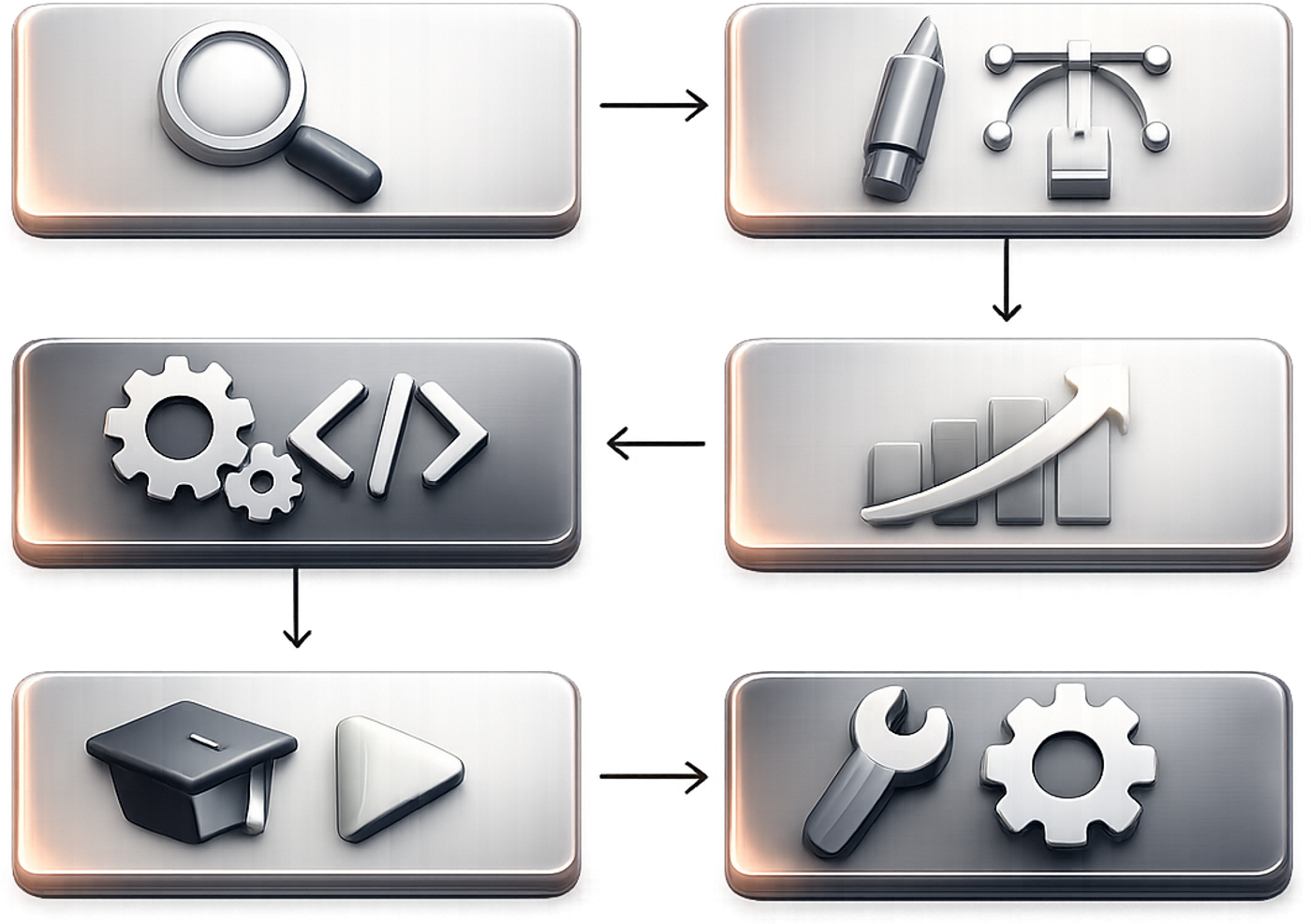
A good quote breaks down the work blocks, deliverables, and workload assumptions. A bad quote shows an attractive total, but leaves unclear what is actually included.
To compare properly, you need to read the document by value block. The price of a website then becomes understandable, because you can see what funds strategy, creation, and launch.
- Scoping must specify the objectives and scope
- Design must include mockups or prototypes
- Integration must cover responsive behavior and testing
- Follow-up must mention training and support
Scoping and design
This first line should cover workshops, sitemap, UX trade-offs, and key mockups. If this part is missing, the quote often underestimates the thinking time required.
Strong scoping avoids correcting the project too late. It sets priorities before design or development begins. The more the quote describes the upstream phase, the easier it is to compare two providers on equal footing.
Design, integration, and basic SEO
The price rises when the design is original, the integration precise, and the responsive rendering controlled across several screen sizes. Basic SEO also adds concrete tasks, such as tags, heading hierarchy, and technical performance.
On Webflow, these items are often easier to read when separated in the quote. That makes it possible to see whether the team covers art direction, integration, and launch settings.
- Art direction and approved mockups
- Faithful screen integration
- Mobile and tablet compatibility
- Minimal technical optimization
Training, maintenance, and scalability
A serious quote also mentions how the site will be handled. This matters, because it determines the autonomy of the team that will later publish the content.
Maintenance and scalability must be clear if the website is to live on after launch. This is a point we often include at mad.studio when a project needs to remain agile without constantly relying on a developer.
- Administration training
- Post-delivery support
- Corrective maintenance
- CMS scalability capacity


